Many who know me would say, Coding is absolutely my happy place, and platform engineering, and building automation and tools to support development more so. I’ve always been productivity focused when it comes to development. And solve the challenges of people building software to solve hard problems really is where I find my zen.
It’s funny, because when I started my career, I graduated college with an IT degree, and a fact my father loved to remind me was, when he asked me what I wanted to do. I told him “Anything but that programming %$&##.” And that has been what defined my career. A fact he loved to remind me of often.
What’s most interesting to me is the needs around the development of Mission software. The reality has really set in during the past few years, highly compliant isolated environments have created a lot of problems. Things like parity gaps, technology gaps, skilling gaps have plagued much of the defense industry. It’s hard to find talent, get clearances for them, and incentive developers to work in environments that are so far behind and difficult to work in.
For years, building software for the defense industrial base meant accepting a painful tax: develop something useful in a fast commercial environment, then rebuild much of it from the ground up to survive in classified, air-gapped networks. The developer loop that felt effortless on the low side turned into a slog the moment mission requirements entered the picture. That tax is finally coming down, and “build low, deploy high” is the philosophy driving it.
The premise is straightforward. Develop and test in lower-impact environments — commercial Azure, IL2, IL4 — where your inner loop is fast, your tooling is rich, and iteration is cheap. Then promote that same code, those same agent patterns, and the same architecture up the classification ladder into IL5, IL6, and air-gapped Secret and Top Secret clouds, with minimal rework. The key word is minimal. When the platform is consistent from commercial to the high side, promotion becomes a controlled step rather than a rewrite.
Now where I find most people get this very wrong, is they say “Yep, Build low deploy high means develop code, promote to the high side, and have automation to deploy it.” And they stop there.
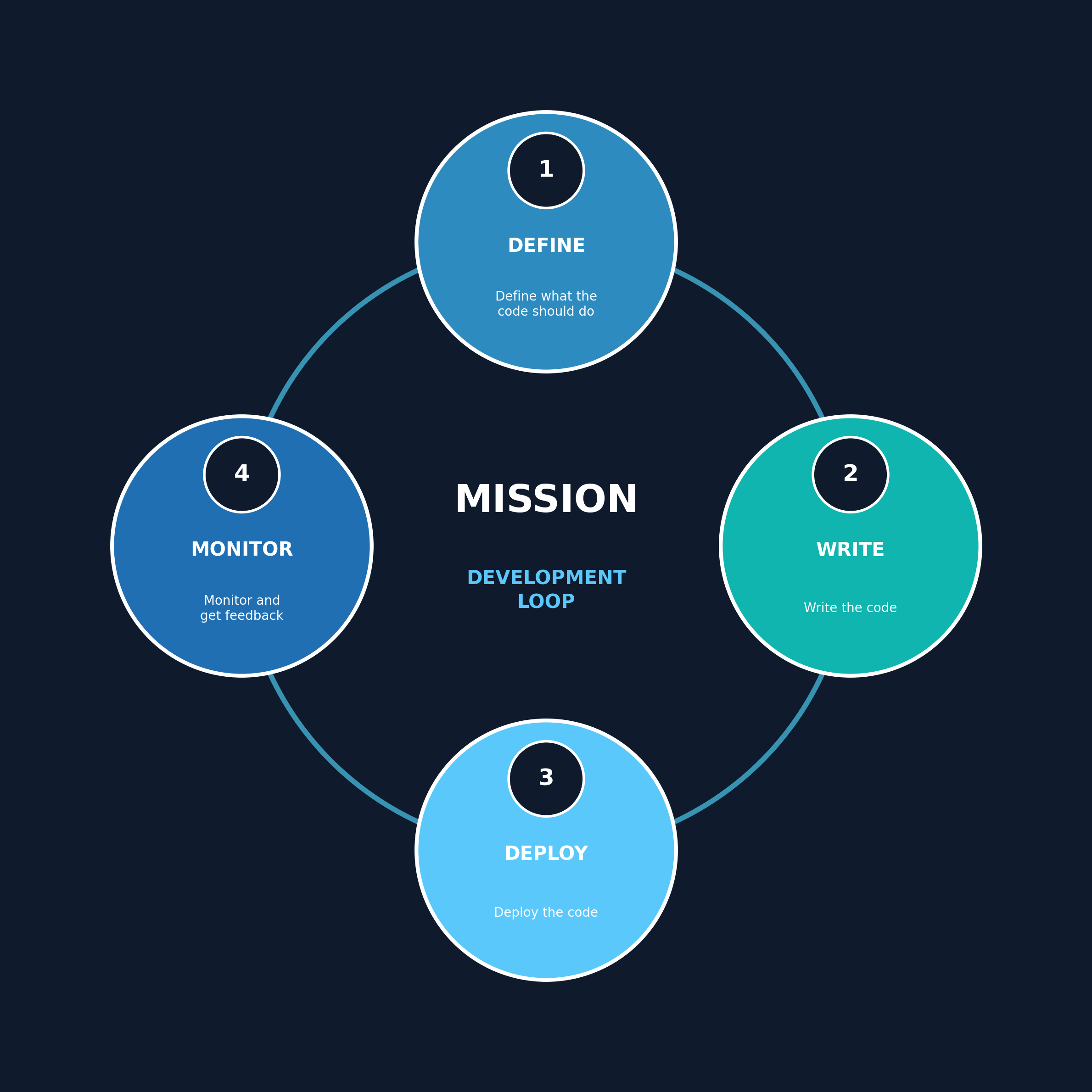
That is literally half of the loop required to build software. Building software requires a loop consisting of 4 parts.
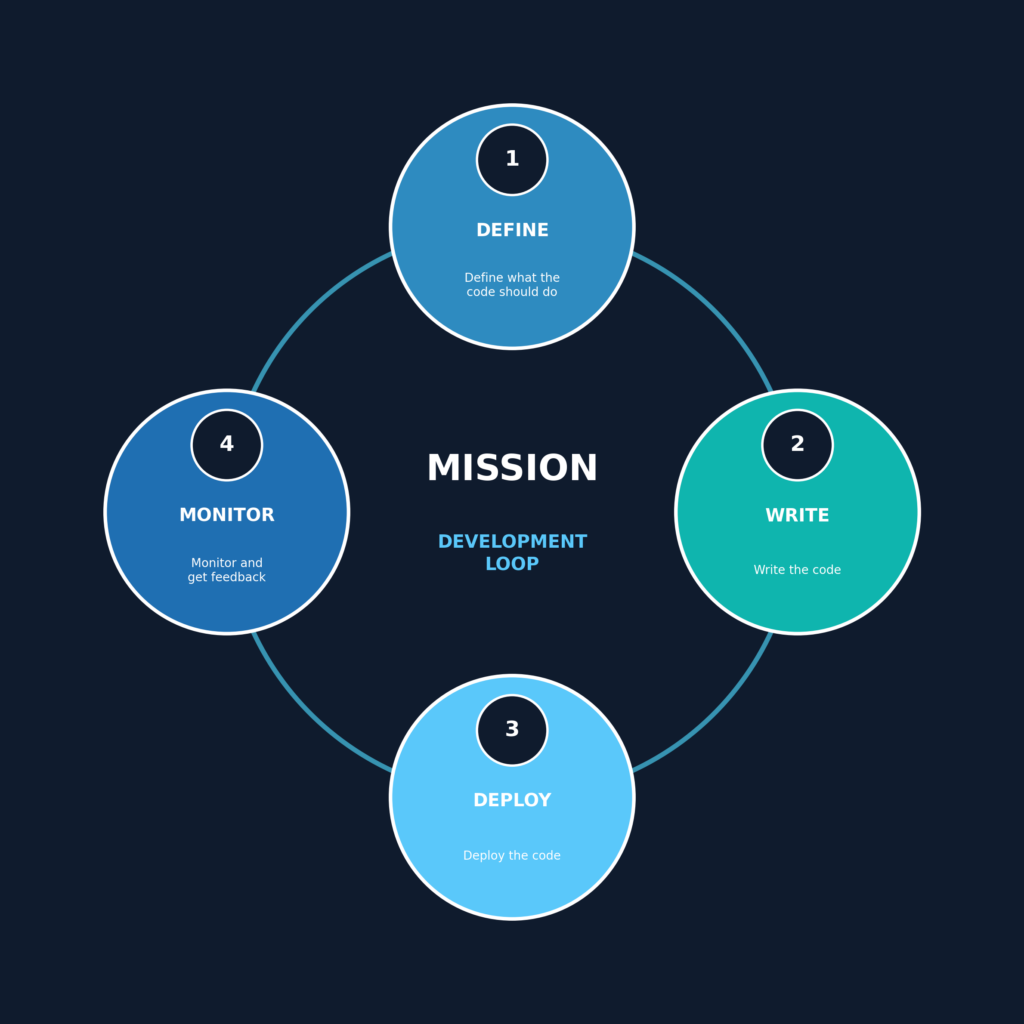
And while we look at the process many define, it does cover 3 out of 4 parts, that 4th one is the most important. How do we get feedback to the developers? How do we handle problems? And that’s where LLMs and AI coding assistance can help. That ability to take logs and sanitize them, or even review errors, make changes and transfer the code changes from high to low. That’s where the real power is.
The industry has reached an inflection point that makes this real. The DoD is expanding classified AI work to more providers, JWCC Next is shaping how the department buys and consumes cloud, and authorizations like Azure OpenAI at IL6 mean the models developers already build against in commercial follow them into the secret cloud. Air-gapped AI in classified environments has moved from headline to operational reality. The gap between “what I can build” and “what I can deploy to the mission” is closing faster than most teams realize.
Microsoft’s role here is less about any single product and more about a unified, security-first platform. Azure Government, the growing list of Foundry models available in gov, the Microsoft Agent Framework that unifies Semantic Kernel and AutoGen, and a defense-in-depth approach to autonomous agents all point the same direction: build once, secure throughout, deploy across impact levels. Security isn’t bolted on after the fact — it’s woven through the developer loop, which is exactly what mission systems require when an agent might act on its own.
For DIB teams, the practical path forward is clear. Start in a lower environment with real samples and frameworks, get hands-on with agent patterns, lean on the Azure Government roadmap to architect with eyes open, and treat promotion to the high side as a planned milestone rather than a cliff. The teams that internalize “build low, deploy high” aren’t sacrificing velocity for compliance — they’re getting both. That’s the future of software for the mission, and it’s available today.
Industry / Microsoft News
- DoD expands classified AI work with eight companies — DefenseScoop
- JWCC Next and DoD cloud spending — DefenseScoop
- Azure OpenAI authorized for IL6 defense operations — Defense One
- Microsoft expands Copilot agentic tools in government clouds — Nextgov
- Microsoft AI for Defense & Intelligence
Microsoft’s Value
- AI-powered defense for an AI-accelerated threat landscape — Microsoft Security
- Defense in depth for autonomous AI agents — Microsoft Security
- Foundry models sold directly in Azure Government
Technical Information
- Azure Government product roadmap
- Azure Government Cognitive Services
- Azure AI Foundry agent samples — GitHub
- Agent Innovator Lab: Microsoft Agent Framework
Videos
- Microsoft Foundry — everything you need to build AI apps & agents (Microsoft Mechanics)
- Microsoft Mechanics series channel