It’s been a crazy November and now into December, and the month of December is not slowing down at all. And that’s even more true for the world of AI.
One increasingly apparent truth is that the AI world is now growing exponentially. If you look at the news below it is becoming more and more impossible to keep up with the speed of advancement and innovation. And this is something that is a regular point of discussion when I get to engage with customers. How can the enterprise keep up with this level of change?
The simple answer it can through platforms. The fact is the idea of “We are going to implement model X, across the enterprise.” Is “old-world” thinking, the real way to ensure the best of AI to support the enterprise is through platform engineering. And what I mean by this is that by embracing the levels of change that are required by the environment and accepting this as the known default we all live in.
Take for example, the idea of Agile Development. One of the tenants of Agile is that we “Embrace that change is part of the process, and not a product of the process going wrong.” This idea is important because by making it part of the process, we can streamline things to embrace the evolving landscape.
AI is very much reaching the same inflection point, when you embrace the idea that “New Models are coming all the time,” we can embrace the idea of creating a platform for innovation. Take for example, AI Foundry, we could build solutions that embrace specific models coming out of an AI Foundry, or we can understand that AI Foundry is going to empower us with a marketplace of models, so that as needs and requirements change, we can easily pivot from one model or another.
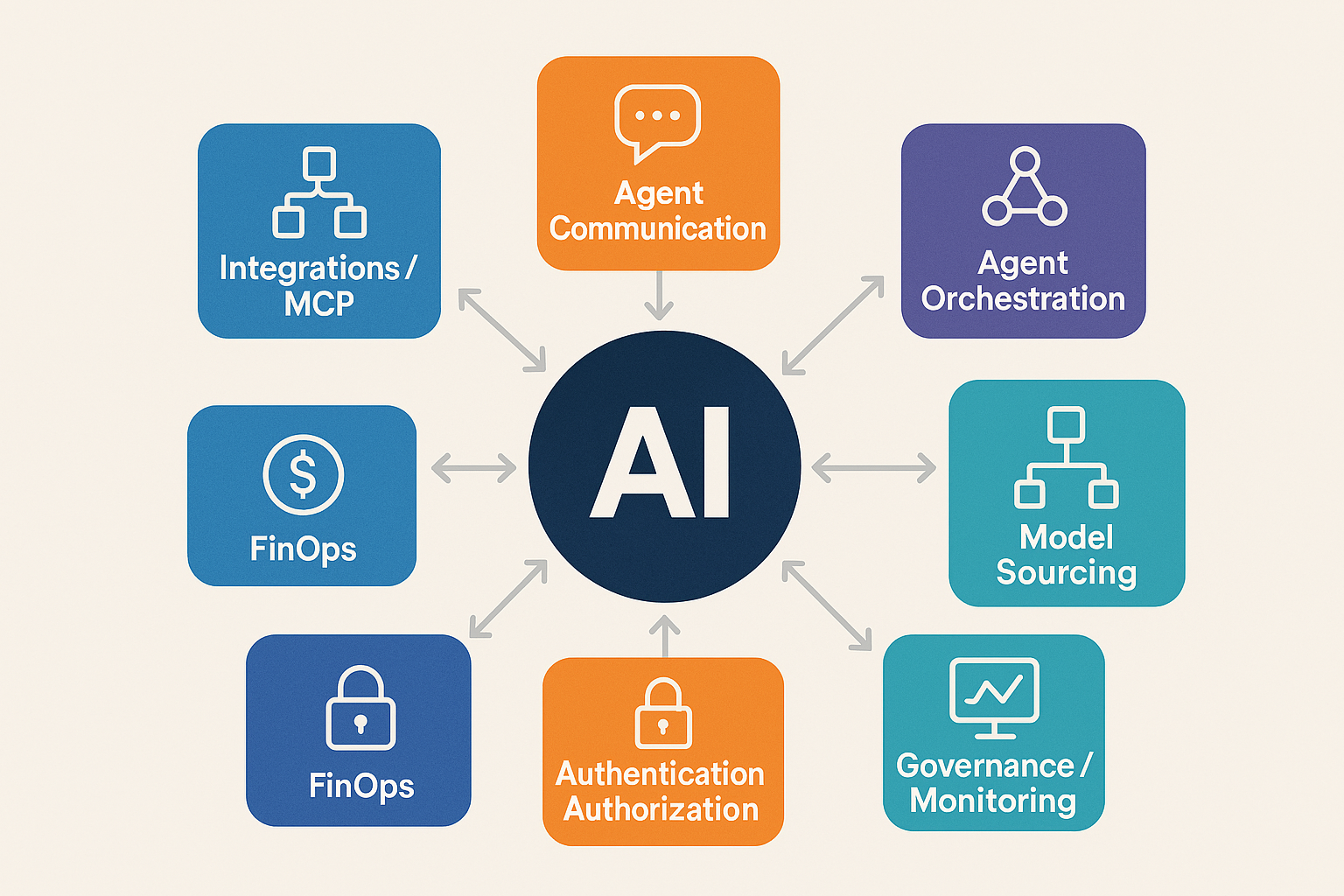
Similarly, this is why when we build AI solutions, we need to focus on certain key areas:
- Model Sourcing: First and foremost, the question of how we source models for this solution. There are always considerations involved with how models get into the environment. By leveraging tools like AI Foundry, we have the opportunity to leverage the catalog available to support adding new models as the requirements dictate it.
- Integrations / MCP: For Agentic, and even RAG solutions, the questions around how you make data and tools available to your AI solution are important to be answered. How does your solution support bi-directional communication to allow for scaling and growth?
- Agent Communication Patterns: If you are going to be building Agentic solutions, or solutions that leverage AI Agents. An important platform consideration is how do these agents communicate back and forth. By establishing a communication pattern / platform, we empower innovation to grow agents that use different models but enable a return on investment.
- Agent Orchestration: Another key element of supporting agents and building Agentic solutions, is you need to define a pattern or tooling around supporting orchestration of agents. By deciding on, and locking in on a pattern / technology here, we can leave room to innovate and evolve our solutions.
- Governance / Monitoring: You can’t have anything in the cloud without these two. You need to have governance over the solution to control and enforce policy on that environment. And you need to have visibility into the solution, and the health of the solution and agents.
- Authentication / Authorization: As you build out a solution, especially for Agents, you need to figure out the controls around Zero Trust, and specifically authentication and authorizations.
- FinOps: And finally, you need the ability to track spend and scale with regard to that solution.
By embracing that building an AI solution more involves tackling these concerns and areas. By empowering and focusing on these elements for building out an AI platform, we can absolutely ensure that we are “future proof.” I normally hate that term, but here we are focusing on building a platform that provides these basic items out of the box, we can then embrace anything new that comes out by supporting the “table stakes.”